Inflation was the lowest in 21 years in 2025, although it ticked up by 0.2% in December compared to November, ending the year on 3.6%.
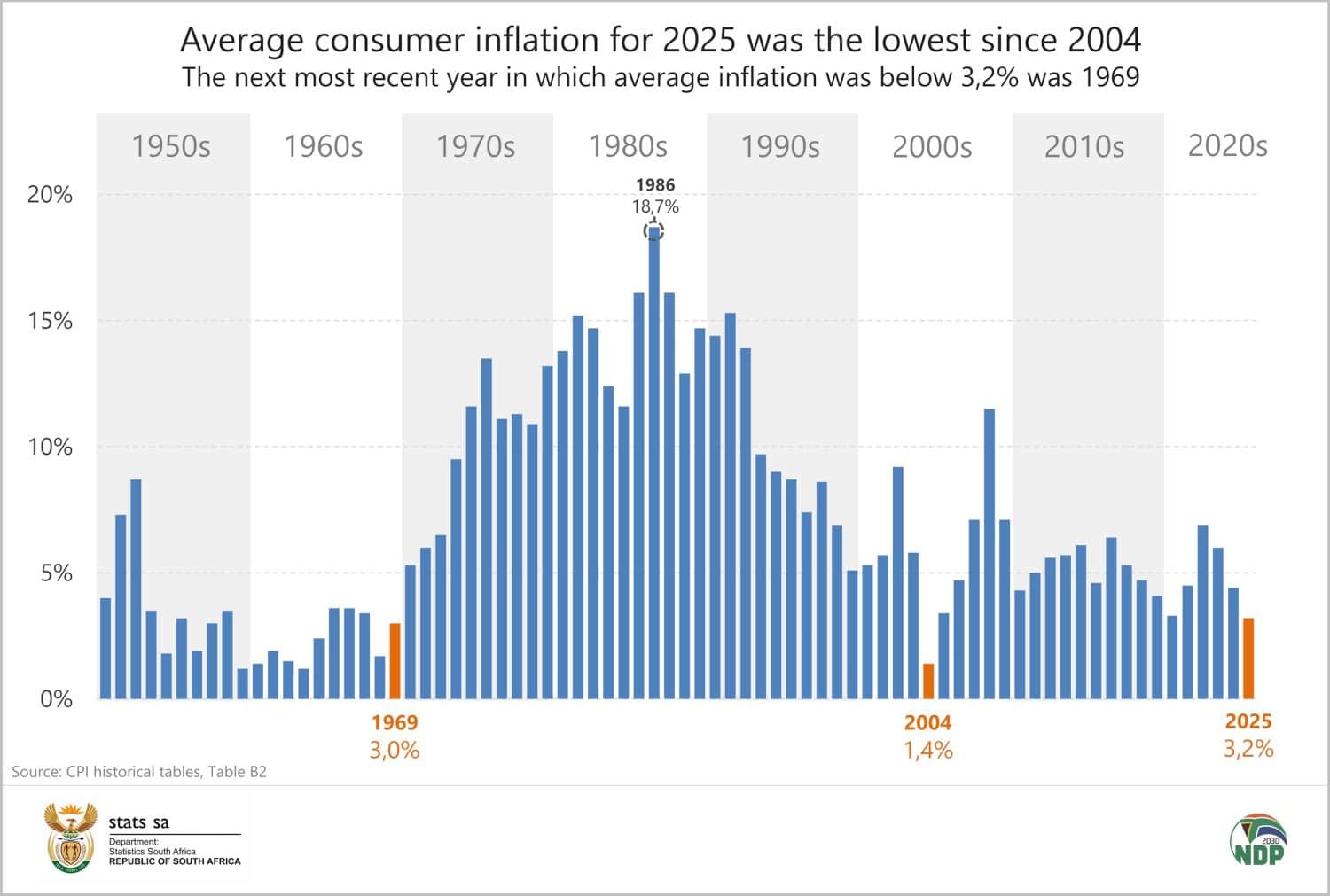
Statistics SA announced the inflation rate for December, the last for the calendar year, on Wednesday morning. The average inflation rate for 2025 was 3.2%, the lowest rate since 2004, when it was 1.4%. The next most recent year that average inflation was lower than 3.2% was in 1969, 56 years ago, when it was 3.0%.
This chart shows how inflation performed over the years:
Food inflation steady in December
According to Statistics SA, food inflation was stable for food and non-alcoholic beverages at 4.4% in December, although it contained bad news for meat eaters.
Meat inflation continued its upward trajectory, increasing to 12.6% in December from 12.2% in November. In December 2024, the rate was -0.4%, showing how quickly meat inflation accelerated over the year.
Beef inflation remains at high levels, with beef steak, for example, recording an annual price change of 28.4% in November and increasing to 29.4% in December. Other notable red meat products that registered higher rates include sausages (from 18.5% in November to 19.4% in December), boerewors (17.2% to 18.2%), mutton (13.7% to 15.0%) and pork (9.4% to 11.5%).
The price of cereal products also increased,
Inflation for cereal products rose from 1.7% in November to 2.1% in December. Several key items experienced faster price increases, including brown bread (accelerating from 0.5% to 1.0%), white bread (1.3% to 1.7%) and spaghetti (1.7% to 3.1%).
Inflation for maize meal declined for a second consecutive month, slowing to 9.5% in December from 9.9% in November.
The milk, other dairy products and eggs category remained in deflationary territory at -1.1%, mainly led by cheaper milk products. The annual rate for fresh full-cream milk, for example, declined further to -1.5% from -1.2% in November. Cheese continues to buck the trend. Cheddar prices rose by 9.0% in the 12 months to December, higher than the 4.9% rise recorded in November.
The annual rate for oil and fats slowed to 4.6%, with sunflower oil softening to 6.2% from November’s 6.6%. Olive oil is 8.0% cheaper than a year ago.
Prices for non-alcoholic beverages rose by 4.2% in the 12 months to December, higher than November’s rate of 3.7%. Inflation for cold beverages recorded a notable rise from 1.4% in November to 2.2% in December.
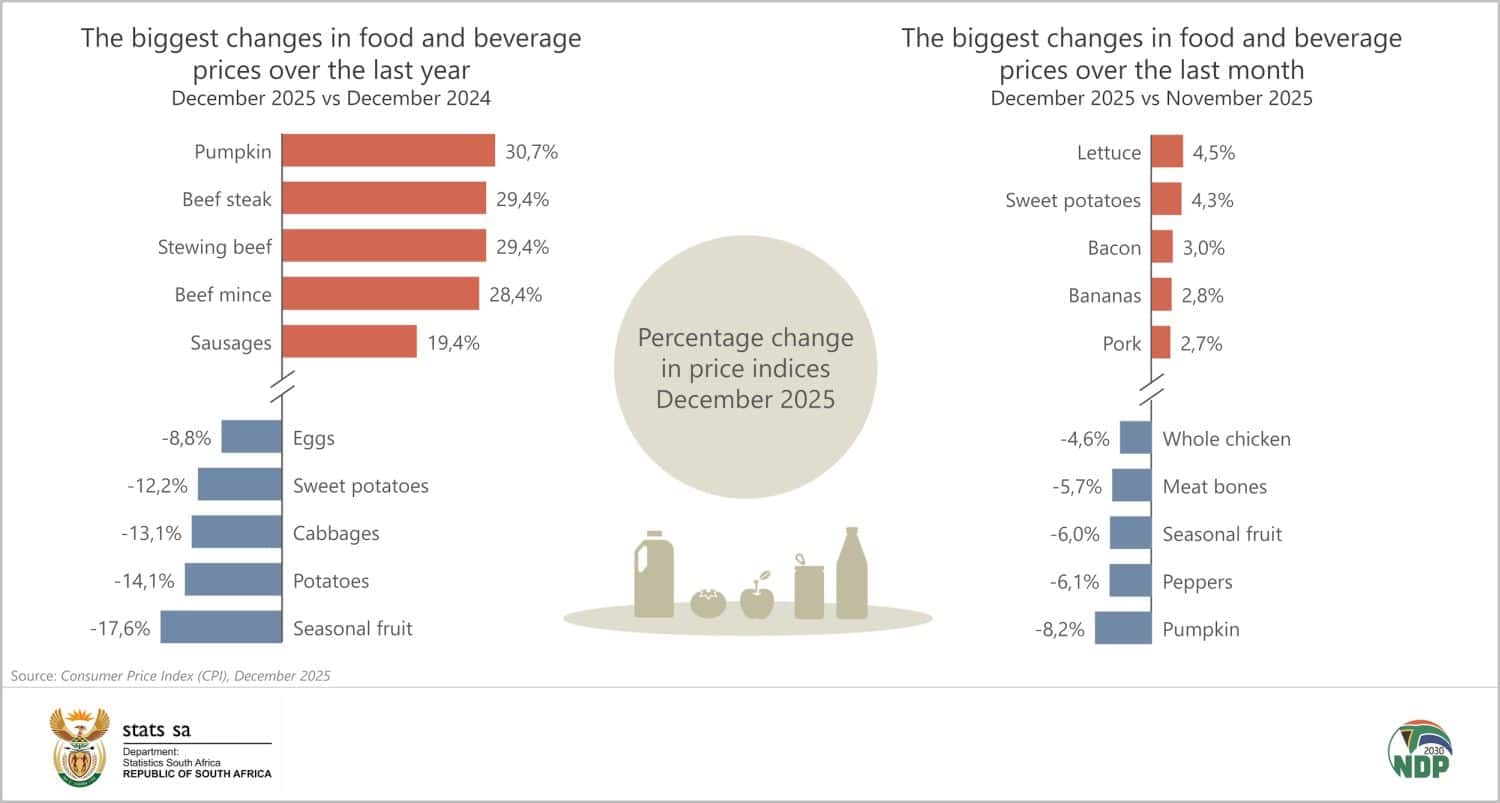
The graph below shows the food and beverage products that recorded the sharpest price increases and decreases.
Other notable price changes
Results from the quarterly survey of housing rents were published in December. Actual rentals increased by 0.8% in the fourth quarter of 2025 compared with the third quarter, down from 1.1% recorded in the previous quarter. The annual change for actual rentals was 3.7% with townhouses increasing by 4.6%, flats by 4.2% and houses by 3.3%.
Domestic workers saw their pay increase by an annual 3.8% in December, lower than the 4.1% rise recorded at the end of 2024.
Fuel prices rose by 0.6% in the 12 months to December. Diesel was up by 3.7% and petrol by 0.1%.
Fares for long-distance buses rose significantly (by 38.6%) between November and December. Sharp monthly increases in December are typical, reflecting a spike in travel during the festive season. Despite this monthly increase, these prices were 5.6% lower this December than the previous year.
Accommodation services recorded a decline of 3.2% between November and December, with hotel prices easing by 5.0%.
READ NEXT: SA starts to feel impact of US tariff, especially in automotive exports